Skin boosters
Deep hydration for skin that looks dull, dehydrated or crepey.
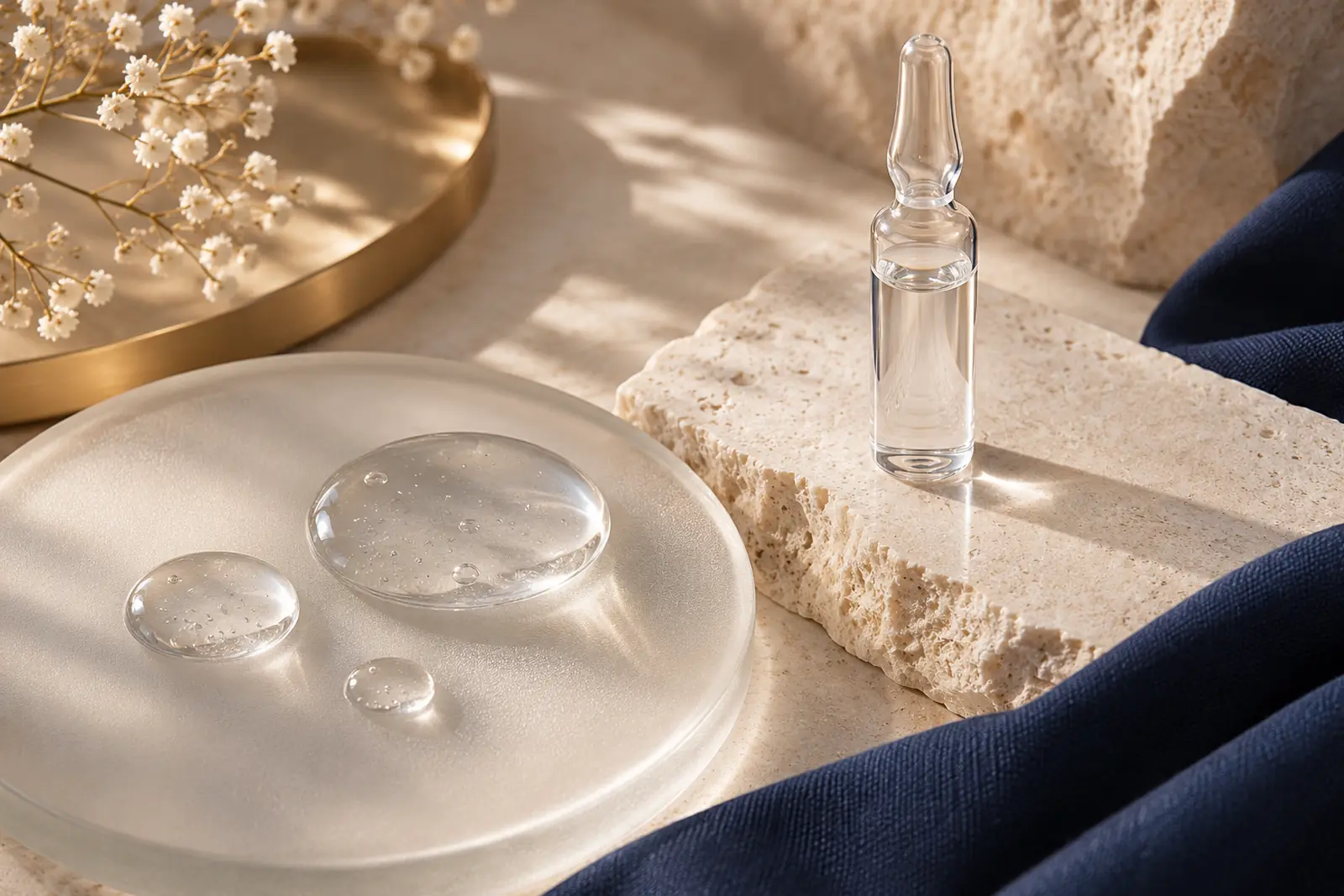
Skin boosters are injectable, hyaluronic-acid based treatments spread across an area of skin rather than used to add volume.
They're given as a planned course agreed at consultation, after a review of your skin, your goals and your medical history.
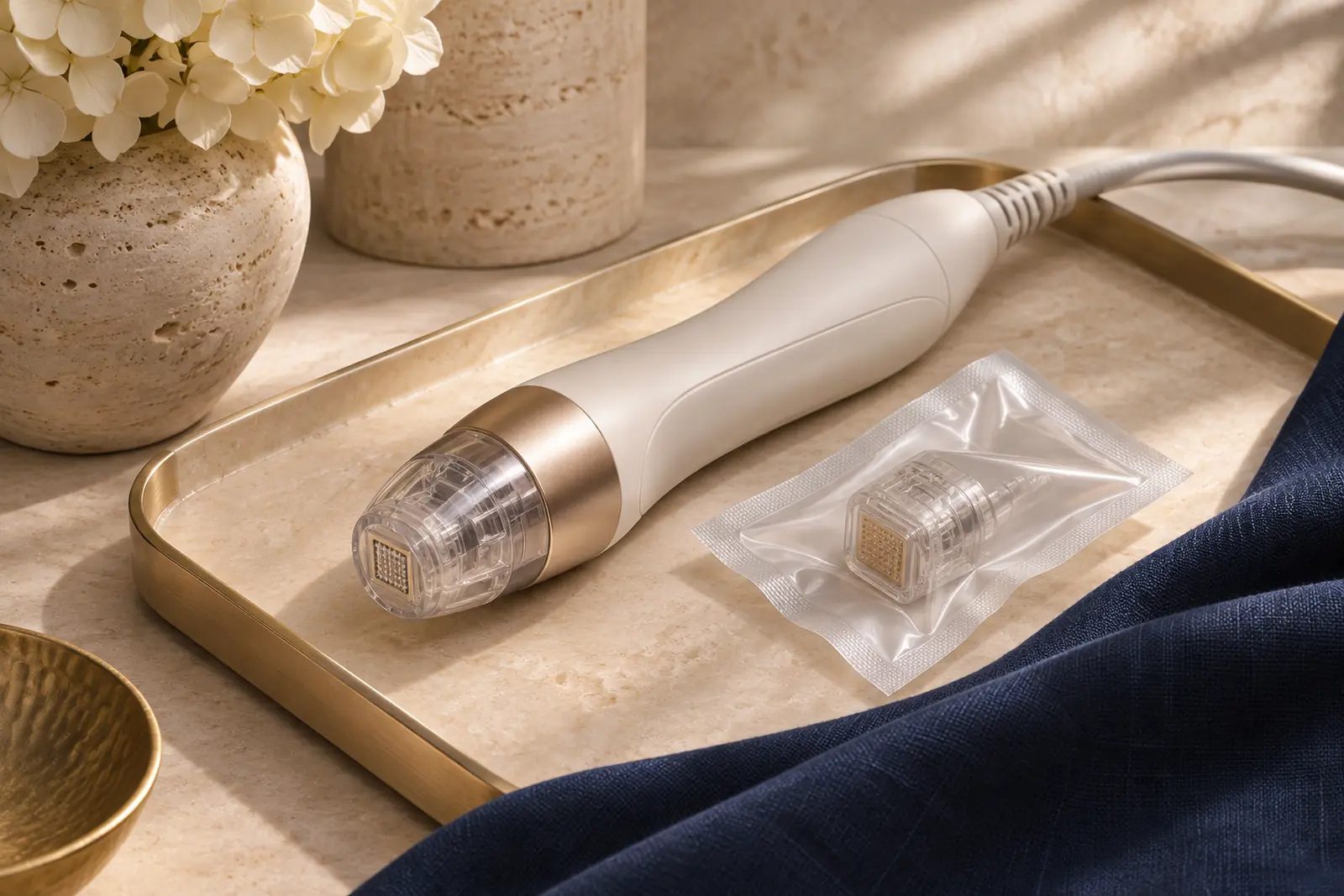
Depending on your goals, Rebeca may suggest combining it with polynucleotides or RF microneedling as part of a wider plan.
Skin boosters we use
Hyaluronic acid spread across the face or neck to improve hydration and skin laxity. Face, neck, or face and neck together.
The same approach for the arms, legs, tummy and décolletage.
A hyaluronic-acid microdroplet treatment for smoother, more radiant cheek skin.
A skin booster used in our neck treatments. See neck rejuvenation.
How skin boosters work
Skin boosters use hyaluronic acid, a substance your skin already makes, to draw in and hold water. Instead of being shaped like filler, it's placed in small amounts across an area so it spreads through the skin.
The result is skin that looks more hydrated, smoother and more radiant, without changing the shape of your face. Different products suit different areas and concerns, which is why the choice is made at consultation.
Who they're for
Skin that looks dull, dehydrated or crepey, fine lines from dryness, or skin that has lost some bounce. They're popular before an event, after a change in weight, or as part of a long-term plan with other skin treatments.
Results and upkeep
Many people see a difference in hydration within two to four weeks. A short initial course is common, followed by top-up treatments; Rebeca will explain the usual timing for the product she recommends.

Honest advice, and knowing when to say, “You don't need that.”
Rebeca Lydiatt · RGN, Nurse Prescriber
How it works

Your goals, history and questions first.

Rebeca explains options, cost and timings.

Around 45 min, only what you need.

Aftercare to follow and a review if needed.
Is it right for you?
- Not offered to anyone under 18.
- Not offered during pregnancy or breastfeeding.
- Not offered where there's an active infection or skin condition at the treatment site.
- Common: small raised bumps at injection points, redness, tenderness and bruising, usually settling quickly.
- Less common: lumps or nodules, particularly with collagen-stimulating treatments, and infection.
- Your medical history is checked first to reduce the chance of a reaction.
Results vary from person to person. Everything is explained before you consent, and you can take time to decide.
Good to know
Is it the same as filler?
No. These treatments are spread across an area to improve the skin itself, not to add volume, so the shape of your face doesn't change.
How many sessions will I need?
They're usually given as a short course. The number of sessions and the gap between them are agreed with you at consultation.
Is there downtime?
Small bumps at the injection points and some redness are common and usually settle quickly. Bruising is possible.
Does it hurt?
Numbing cream is applied first. Most people find it very manageable.
You might also consider
 Injectables
 Skin
Questions about skin boosters?
Leave your details and Rebeca will get back to you, usually the same working day.
“Very refreshing to have expert advice in a clear, non-pushy way.”